Choose Glass for Light
A high-performance glass roof can retain the bright, open feel associated with a traditional conservatory while using modern glazing designed for improved thermal performance.

The right conservatory roof depends on how you want the room to feel and how you plan to use it.
Natural light, thermal comfort, appearance, the condition of your existing conservatory and your budget can all influence whether a glass, solid, tiled or hybrid roof is the most suitable choice.
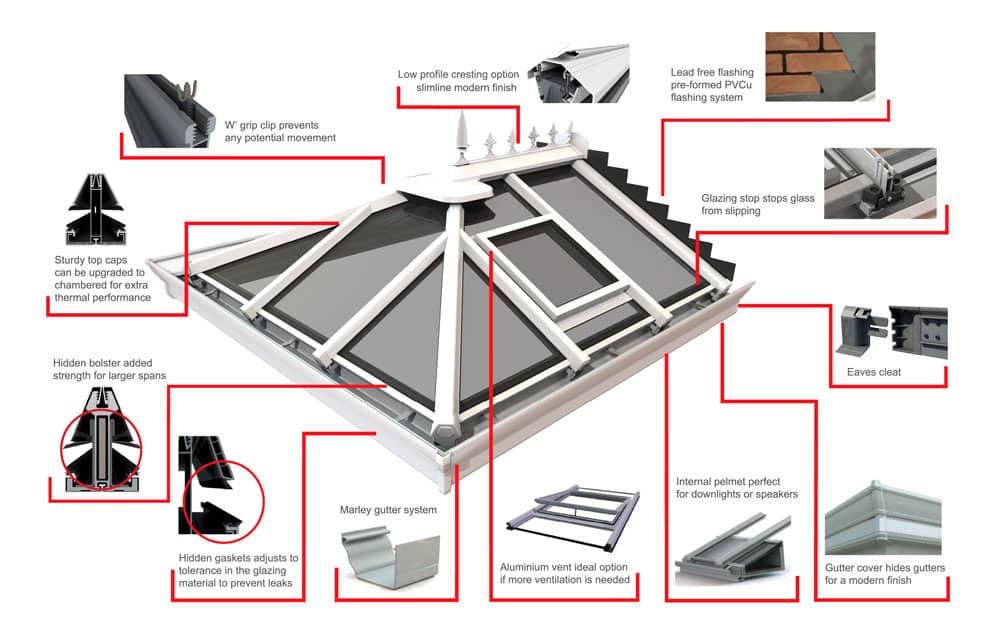
A high-performance glass roof can retain the bright, open feel associated with a traditional conservatory while using modern glazing designed for improved thermal performance.
A solid or lightweight tiled roof creates a more enclosed ceiling and can make the conservatory feel more like a conventional room.
Some modern roof systems allow glazing panels to be incorporated into an insulated roof, helping balance natural light with a more solid ceiling design.
Before choosing a roof material, think about what you want the conservatory to become.
A room used mainly for relaxing and enjoying the garden may place a higher priority on natural light and views.
A home office, dining room or everyday living area may benefit from a more room-like atmosphere, improved temperature control and space for lighting or other ceiling finishes.
There is no single conservatory roof that is automatically best for every property.
Glass retains the traditional bright conservatory appearance and allows a large amount of natural light into the extension.
Modern conservatory roof glass can use energy-efficient coatings and specifications designed to help control heat transfer and solar gain.
A predominantly glazed ceiling creates a very different atmosphere from a plastered solid roof, so think about glare, privacy and the way the room will be used as well as thermal performance.
Learn more about glass conservatory roofsSolid and lightweight tiled roof systems normally have an insulated construction with an internal ceiling, giving the conservatory a feel closer to a conventional extension.
They can be particularly attractive where the conservatory is intended to become part of the home's everyday living space.
Modern solid and tiled systems can include glazed sections, allowing natural light to be introduced in selected parts of the roof rather than having to choose a completely opaque design.
Explore solid conservatory roofsPolycarbonate has been widely used on conservatories and you may already have this type of roof on an older installation.
However, homeowners replacing an ageing polycarbonate roof now have a much wider choice, including modern glass, solid, tiled and hybrid systems.
If the existing conservatory structure is sound, it may be possible to replace the roof rather than rebuilding the entire conservatory.
| Consideration | Glass Roof | Solid / Tiled Roof |
|---|---|---|
| Natural Light | Very high | Lower, although glazing panels can be added |
| Interior Feel | Traditional bright conservatory | Closer to a conventional room or extension |
| Internal Ceiling | Primarily glazed | Usually insulated and plastered internally |
| Design Flexibility | Different performance glass specifications available | Solid, tiled and hybrid designs with optional glazing |
| Best Choice | Depends on your priorities | Depends on your priorities |
In many cases, an existing conservatory can have its roof replaced without rebuilding the entire structure.
However, the existing frames, support system and base need to be suitable for the proposed replacement roof. A survey should establish whether the conservatory can safely support the new system.
This is particularly important when changing from a lightweight glazed or polycarbonate roof to a different roof construction.
Find out more in our guide: can I change my conservatory roof to a solid roof?
Changing a conservatory roof can affect the regulatory status of the project, particularly when replacing a glazed or polycarbonate roof with a solid or tiled construction.
The requirements depend on the work being carried out and the existing conservatory, so Building Control requirements should be checked before the project begins.
Building Regulations approval and planning permission are separate matters, and one should not be assumed from the other.
Think about whether the conservatory will be an occasional garden room or an everyday living, dining or working space.
Consider the conservatory itself and whether replacing a glazed roof could affect light entering adjoining rooms.
Compare the complete roof systems and their thermal performance rather than choosing on appearance alone.
If you are replacing an existing roof, make sure the conservatory structure is suitable for the proposed system.
Roof construction can make an important difference to the thermal performance and comfort of a conservatory, but the roof is only one part of the complete structure.
Glazing, frames, doors, ventilation, heating and the rest of the building fabric can also affect how the room performs.
Read our separate guide: does putting a roof on a conservatory make it warmer?
There is no single roof type that is best for every conservatory. The right choice depends on natural light, thermal comfort, appearance, room use, the existing structure and budget.
Glass roofs maximise the traditional bright conservatory feel, while solid or tiled roofs create a more room-like internal appearance. Modern systems can also combine solid sections with glazing.
Yes, subject to the existing conservatory being suitable. Modern replacement options can include glass, solid, tiled or hybrid roof systems.
Yes. Some modern solid and tiled roof systems can incorporate glazing panels to introduce natural light into selected areas.
Yes. When replacing a roof, the condition and structural suitability of the existing conservatory should be assessed before the new roof system is fitted.
St Helens Windows can help you compare conservatory roof options based on the way you want to use your room, the existing structure and the look you want to achieve.