Provides Shade
A projecting awning can reduce the amount of direct sunlight reaching the window, depending on its depth, orientation and position.

A projecting canopy positioned above a window is often called a window awning. A permanently attached version may also be described as a fixed or stationary awning.
Fixed awnings can provide shade and additional weather cover while also becoming part of the exterior appearance of the building.
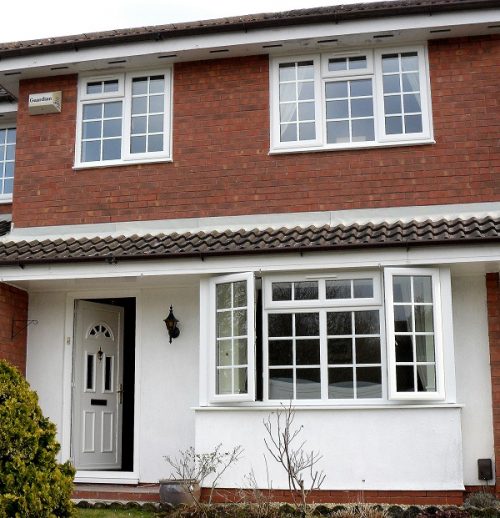
A canopy projecting over a window is commonly called an awning. If it remains permanently in position rather than retracting, it is usually described as a fixed awning or stationary awning.
The exact name can depend on the design. More substantial roof-like structures finished with tiles may instead be described as window canopies or tiled roof canopies.
A fixed awning is a projecting structure permanently attached to the outside of a building above a window.
Unlike a retractable awning, it remains in position throughout the year. Depending on the design, fixed awnings can be made from materials such as metal, polycarbonate, timber or weather-resistant fabric supported by a permanent frame.
A projecting awning can reduce the amount of direct sunlight reaching the window, depending on its depth, orientation and position.
Fixed awnings can provide some additional shelter from direct rain and other weather around the window area.
The shape, colour and material of an awning can add another design feature to the exterior of a property.
Yes. One of the main purposes of an awning is to shade the window below.
The amount of shade depends on factors such as the direction the window faces, the depth and angle of the awning, the time of day and the season.
By limiting direct sunlight, an awning may also help reduce glare inside rooms during periods of strong sunshine.
Aluminium and other metal systems can create a clean, permanent structure with a contemporary appearance.
Polycarbonate panels can provide cover while still allowing some natural light through the structure.
Timber can create a more traditional appearance, although exterior wood normally requires appropriate treatment and maintenance.
The awning should be proportioned appropriately for the width and height of the window below.
Consider how the sun reaches the window and how much projection is required to provide useful shade.
Select a material and finish that work with the exterior style of the building and the level of maintenance you are comfortable with.
Make sure the awning does not interfere with opening windows, views or other exterior features.
The terms are sometimes used loosely, but they can describe different types of structures.
A fixed awning is generally a projecting shade made from materials such as metal, polycarbonate, timber or fabric. A tiled window canopy is more like a small permanent roof and is often designed to complement the main roof of the house.
What is a tiled roof over a window called?It is often called an awning. Permanent versions are commonly described as fixed or stationary awnings.
A fixed awning is permanently attached to the building and remains extended rather than retracting when it is not required.
Yes. Their projection can shade the window from direct sunlight, although the amount of shade depends on their design and the orientation of the window.
It can provide additional cover from direct rainfall, although it does not make the window itself waterproof or replace correct window installation and sealing.
The terminology can overlap. However, awning usually refers to a projecting shade, while a tiled roof canopy normally describes a heavier roof-like structure.
Explore replacement window styles and options designed to complement your home.