Look for Hinges
An opening casement is connected to the frame by hinges rather than moving up and down on a sliding mechanism.

A casement is an opening section of a window that is attached to its frame by hinges.
Most modern casement windows in UK homes are side-hung and open outwards, although top-hung casement openers are also common.
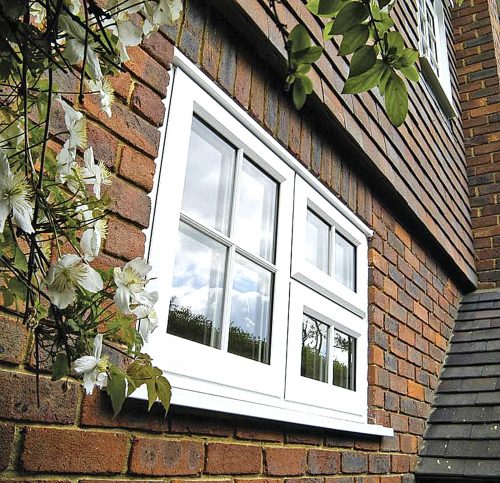
A casement window has one or more opening sections that are hinged to the window frame.
The most familiar type is a side-hung casement that swings outwards when you turn the handle. Casement windows can also be arranged with several fixed and opening sections within the same frame.
An opening casement is connected to the frame by hinges rather than moving up and down on a sliding mechanism.
The glazed opening section, known as the sash or casement, moves away from the frame when the window is opened.
Modern casement windows commonly use a handle to operate and secure the opening sash when the window is closed.
Technically, the casement is the hinged opening part of the window that holds the glazing.
The surrounding structure is the window frame. A larger casement window may contain several sections, with some opening and others remaining fixed.
Vertical sections dividing different areas of the window are commonly called mullions, while horizontal divisions are known as transoms.
The opening sash is hinged vertically at one side and normally swings outwards. This is one of the most familiar casement styles used in UK homes.
The hinges are positioned along the top of the opening section, allowing the bottom of the sash to move outwards.
Two opening casements can be positioned alongside each other, creating a wider opening when both sections are opened.
Uses hinges to allow an opening sash to swing away from the frame.
Uses sliding sashes that move within the frame rather than swinging open on conventional side hinges.
Does not open at all and is primarily used to provide glazing, natural light and views.
Opening casements can provide a substantial clear opening, making them useful where ventilation is required.
Opening and fixed sections can be combined in many different layouts to suit the size and shape of a window opening.
Modern casement windows are available in materials including uPVC, aluminium and timber.
No. The word casement describes the hinged opening principle rather than one exact appearance.
Casement windows can have different frame materials, glazing layouts, colours and opening configurations. There are also standard and flush casement designs, which differ in how the opening sash sits against the outer frame when closed.
If you are choosing new windows rather than simply identifying the style, visit our casement windows page for the available design options.
It refers to an opening window section that is attached to the frame by hinges.
Look for an opening sash attached to the frame by hinges. Side-hung casements are especially common and usually swing outwards when opened.
No. Side-hung casements are very common, but casement window configurations can also include top-hung opening sections.
A casement opens using hinges, while a traditional sash window opens by sliding one or more sashes within the frame.
Yes. Modern casement windows are commonly available in uPVC as well as aluminium and timber.
Explore our range of casement windows for traditional and modern homes across St Helens and the surrounding area.