More Internal Space
Because the sash moves outside, it does not swing across curtains, furniture or usable space inside the room.

Many British homes use outward-opening casement windows, where the opening sash swings away from the room rather than into it.
This design is common because it suits traditional UK casement window styles, keeps the open sash out of the room and can provide practical ventilation and weather protection when correctly designed and installed.
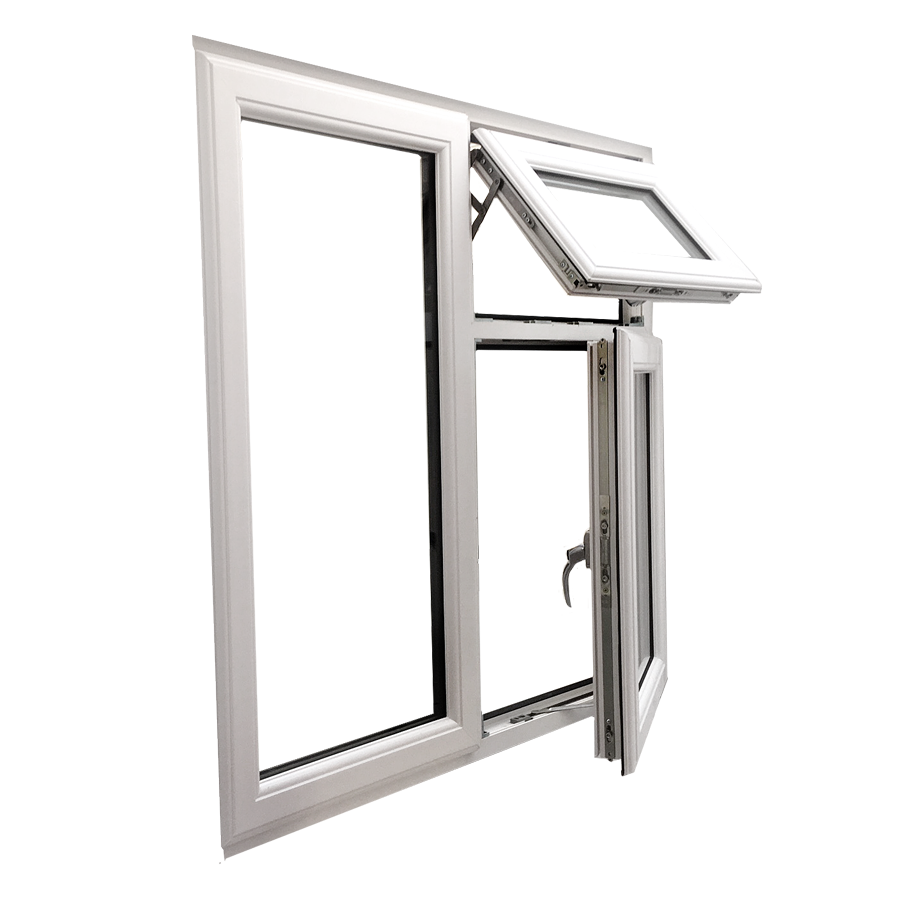
Outward-opening casement windows are common in Britain because the design works well with traditional UK window styles while leaving the inside of the room clear when the window is open.
Their popularity also reflects long-established casement-window design and the practical way modern frames, seals and hardware can be arranged around an outward-opening sash.
However, not every British window opens outwards. Inward-opening, sliding, sash and tilt-and-turn windows are also used in UK homes.
Casement windows are one of the most familiar window styles found on British homes.
A side-hung casement is hinged vertically at one side and commonly opens outwards, while a top-hung casement is hinged along the top and opens outward from the bottom.
The design is available across modern uPVC, aluminium and timber window systems, which helps explain why outward-opening windows remain so common across both older and newer UK properties.
Because the sash moves outside, it does not swing across curtains, furniture or usable space inside the room.
Side-hung and top-hung casements can provide substantial openable areas for purge ventilation when the weather allows.
Modern outward-opening casement systems can be designed with frame, sash and seal details that help manage wind and rain around the closed window.
They can.
An outward-opening sash does not project into the room, which can be useful where furniture, window dressings or internal circulation space sit close to the window.
This is a practical advantage of the design rather than a rule that every British home needs outward-opening windows.
Outward-opening casement windows can provide a large openable area, making them useful for rapidly ventilating a room.
How much ventilation a window provides depends on its size, opening angle, configuration and the surrounding conditions rather than simply whether it opens inward or outward.
Modern ventilation requirements also consider background ventilation separately, which can include purpose-designed ventilators such as trickle vents.
Weather performance depends on the complete window system, including the frame profile, seals, drainage and installation.
Some outward-opening casement designs use overlapping or lipped sash details that can help shed rainwater away from vulnerable frame edges.
Opening direction alone does not make a window waterproof, so the quality of the window and its installation remain important.
Opening direction alone does not determine how secure a window is.
Security depends more heavily on the frame, glazing, hinges, locking hardware and the way the complete window has been manufactured and installed.
Modern casement windows can incorporate multi-point locking and other security features regardless of the fact that the sash opens outward.
Not simply because they are escape windows.
Where an escape window is required, the important considerations include providing an adequate clear opening and ensuring that the window can be opened appropriately for escape.
This should not be confused with a general rule requiring all British windows to open outward.
Yes. Outward-opening casements are common, but they are not the only option available in Britain.
Tilt-and-turn windows, for example, typically open inward and can also tilt for ventilation. Vertical sliding sash windows operate differently again and do not swing either inward or outward.
The best configuration depends on the property, required ventilation, available space, appearance and how the window needs to be used.
Common on traditional British casement windows and keeps the open sash outside the room.
This can be useful where internal space around the window is limited.
Common on designs such as tilt-and-turn windows and can make access to the external glass easier from inside.
However, the open sash requires clear space inside the room.
No. Outward-opening casement windows are very common in Britain, but inward-opening, tilt-and-turn and sliding sash windows are also used.
Casement windows are a familiar and versatile window style that can work with traditional and contemporary properties and are available in materials including uPVC, timber and aluminium.
Some casement frame designs are particularly effective at shedding water, but weather resistance depends on the whole window system and its installation rather than opening direction alone.
There is no general rule requiring all domestic windows to open outwards. Building requirements instead cover matters such as ventilation, safety and means of escape where applicable.
Yes. Inward-opening designs such as tilt-and-turn windows are available in the UK where they suit the property and requirements.
Explore window styles, opening configurations, colours and materials designed to suit your home.